
Care, Support &
Assistance solutions
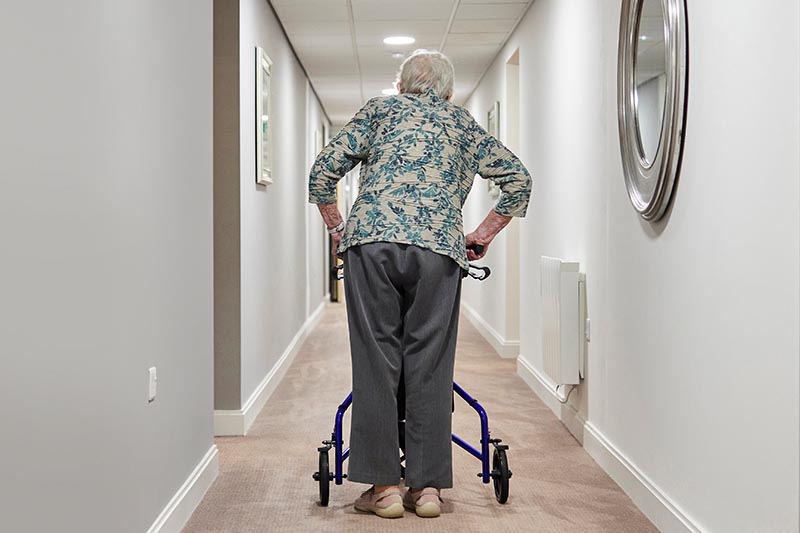
Care decisions are rarely made in a calm and relaxed atmosphere.
The need for care and support often develops gradually – but the decisions it triggers have to be made suddenly. It is usually family members who, under time pressure, have to research, compare, organise and decide. With little guidance and under considerable emotional strain. And often with the feeling that they have to get everything right at once.
Providers of assistance solutions, care services or support services not only compete with other products or service providers. They also compete against overwhelming demands, a lack of information, and entrenched care and advisory routines. If your product also breaks new ground technologically – such as fall detection sensors or care apps – then the overwhelming nature of the choice becomes an additional factor. Are these products safe, and will the solution be accepted?
At the same time, care is becoming an issue that extends far beyond the family. Companies lose working hours, concentration, and skilled staff when employees with care responsibilities are left to cope on their own. Women in particular are cutting back on hours, taking on the organisation and care – or leaving the workforce altogether.
What we often see:
#1 – Your solution makes sense, but it’s hard to explain
Many care and support solutions offer real benefits: They improve safety, take the pressure off family members, promote independence or enhance care at home. But these benefits are often communicated in a way that is too technical, too abstract or too late – and many solutions are still far too obscure.
Those affected and their relatives don’t ask about product features first. They ask: Will this help us now? Is it reliable? Who can explain it to me? How much does it cost? Who organises it? And can I really use it to take the pressure off someone?
#2 – The real decision-makers remain out of sight
People in need of care are not always the ones who research, compare or make arrangements. It is often daughters, sons, partners or other relatives – who are often juggling work, family and their own exhaustion.
These target groups remain completely invisible, and many services are aimed, in their language, either at a specialist audience or at an idealised end customer who is calm, informed and ready to make a decision. The reality, however, is quite different: Decisions regarding care and support are made under pressure and often without any knowledge of the options available on the market.
#3 – Counselling, care and everyday life don’t go together
The care system offers many points of contact, but little guidance for people who suddenly find themselves having to take action. Communication breakdowns occur between care advice services, discharge management, GPs, medical supply shops, service providers, funding agencies and family members.
If services are not embedded within this decision-making reality, they will not be used, despite the need for them. Not because they are poor – but because they are not sufficiently integrated into the everyday lives of the target group.
#4 – Care is a business issue, not just a private one
Many employers underestimate the extent to which caregiving responsibilities affect their employees’ ability to work. Whilst childcare is now widely recognised as a work-life balance issue, caregiving is often still treated as an individual’s personal responsibility: Those affected tend to sort it out privately somehow – 86% of people in need of care in Austria and Germany are now supported and cared for at home.
Yet this is precisely how hours, energy and skilled workers are lost – particularly women. Providing care and relief services can help companies bridge this gap.
What I can do for you
Target Audience
Analysis
Who are your older customers really? What triggers their decision to buy – and what holds them back? I analyse their life situations, decision-making processes and blind spots in your approach to this target group.
Positioning
Older target groups won’t forgive a service that fails to reflect their everyday reality. I’ll identify where your product, your communication or your distribution channel isn’t quite right – and show you exactly what’s needed to ensure your service truly reaches this target group.
Companies that offer care and respite services can establish a strong position in the current care crisis: With both their existing and potential staff.
Understanding
target audiences
Older customers shop differently, make decisions differently – and want to be addressed differently. In workshops, I work with your team to help you truly understand this target group: Their circumstances, their decision-making processes, and the role of their relatives, who often have a greater say in decisions than one might think.
Content &
Communication
I develop content and communication strategies that reach your target audiences – both online and offline, for the buyers themselves and for their families, who are often key decision-makers.
And when it comes to reaching political decision-makers: As a former political press officer, I know what it takes to be heard – the right message, the right timing, the right channel.
GEO & SEO
Anyone looking for senior-friendly solutions these days no longer just asks Google – they ask ChatGPT, Perplexity or the AI assistant in their browser. Whether your offering features in these results depends on how well-positioned you are today.
Together with a specialist partner, I’ll show you how to become visible in search engines and AI systems – with content that gets found and positioning that works algorithmically too. Because if you don’t appear in AI, you simply don’t exist for a growing number of users.
Political Strategy & Communication
If you want to reach political decision-makers, you need more than just a good idea. I will work with you to develop the right messages, at the right time, for the right people – and support you in making your voice heard in a dynamic political environment.
Politicians and local authorities play a key role, particularly in the fields of care and senior living: As clients, as funding bodies – and as partners who should be involved at an early stage.
Why now: The demand for care is rising, but awareness is not keeping pace
People want to live independently in their own homes for as long as possible. This requires more than just care in the strictest sense: It requires clear information on support services, everyday assistance, technologies and other options that are available when needed.
Care is no longer just a private family matter, but a labour market and business issue. What companies have learnt about childcare, parental leave and work-life balance is now also relevant to care: Leaving relatives with care responsibilities to cope alone results in lost working hours, reduced concentration and, in the worst case, the loss of skilled staff. Women continue to be particularly affected. They reduce their hours, coordinate care or leave the workforce altogether. For companies, this means that care and support must be taken seriously as a strategic priority – not as a sentimental social issue, but as a means of securing a skilled workforce.
Here you can find out more about me and the services I offer.
Let’s talk.
Demographic change isn’t some abstract future – it’s changing your target audiences right now. If you’d like to understand the opportunities this presents, I’d be delighted to have an initial chat.
Either fill in the form – or get in touch with me directly anja@owl-lab.at.